ORAL SURGERY
Tooth Extraction
Cyst Removal
Dental cysts can vary in type, origin, and location. Most commonly, they appear at the root tip of non-vital teeth — so-called periapical cysts. In most cases, such a cyst develops as a result of untreated tooth decay that progresses to the dental pulp, causing chronic inflammation. Over time, this process spreads throughout the entire pulp. If left untreated, the inflammation extends through the root tip into the surrounding connective tissue.
This connective tissue, known as the periodontium, consists of fibers, blood and lymph vessels, nerves, and tissue fluid. The tissue fluid has protective properties that become activated during inflammation — leading to the formation of a cyst.
A granuloma may also develop into a cyst. If not treated in time, a granuloma can gradually transform into a cyst.
Cysts can develop around any tooth and at any age. Their presence is usually diagnosed through a panoramic X-ray.
One of the most common causes of a cyst is an insufficient root canal treatment. When the root canal is not properly sealed, inflammation may develop and eventually lead to cyst formation.
Treatment Options:
- Surgical removal
- Medication-based treatment through injection via the root canal
- Endodontic (root canal) treatment
At EO Dent Dental Clinics, we use state-of-the-art technology for the accurate diagnosis and treatment of cysts. Thanks to treatment performed under a dental microscope, our endodontic specialists can significantly reduce the risk of inadequate root canal treatment.
Sinuslift
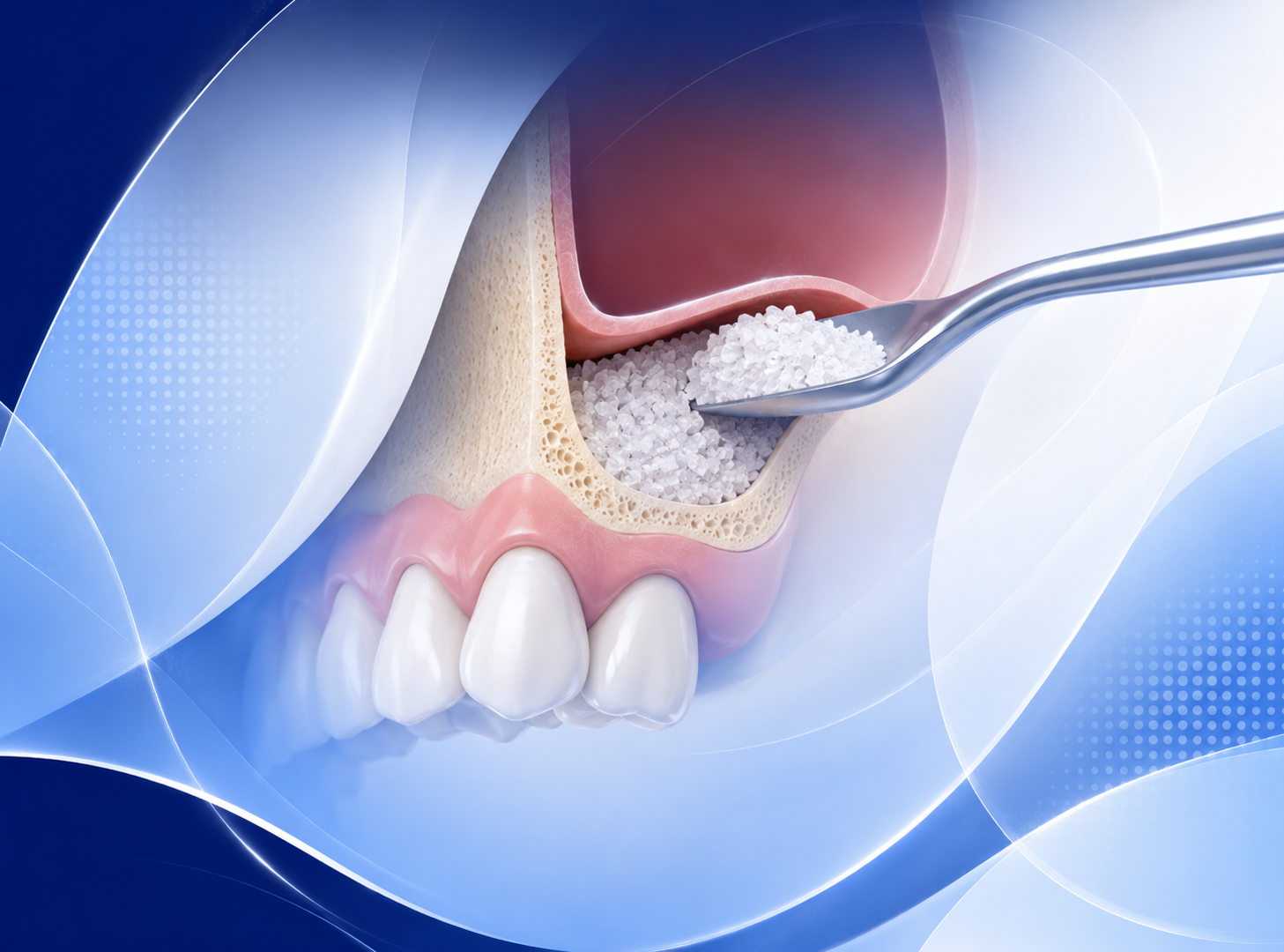
In many cases, the existing bone volume in the area of the upper molars is not sufficient for the secure placement of dental implants. Even the shortest implant cannot be placed when there is severe bone loss. In such situations, the maxillary sinuses, located on both sides of the nose, are positioned too close to the upper jawbone. To make implant placement possible, a procedure known as a sinus lift is required.
In simple terms, this procedure involves lifting the floor of the maxillary sinus and filling the area with suitable bone graft material.
There are two main techniques:
- Lateral sinus lift — side access through the jawbone wall
- Crestal sinus lift — access from below through the implant site (toward the dental arch)
Our new Clinic for Implantology and Surgery offers the best possible conditions in terms of both advanced equipment and experienced specialists capable of performing sinus lift procedures.